
Staying Safe in Storms
In the event of a storm, please follow the below advice to keep yourself and your loved ones safe.
When to call your Fire and Rescue Service
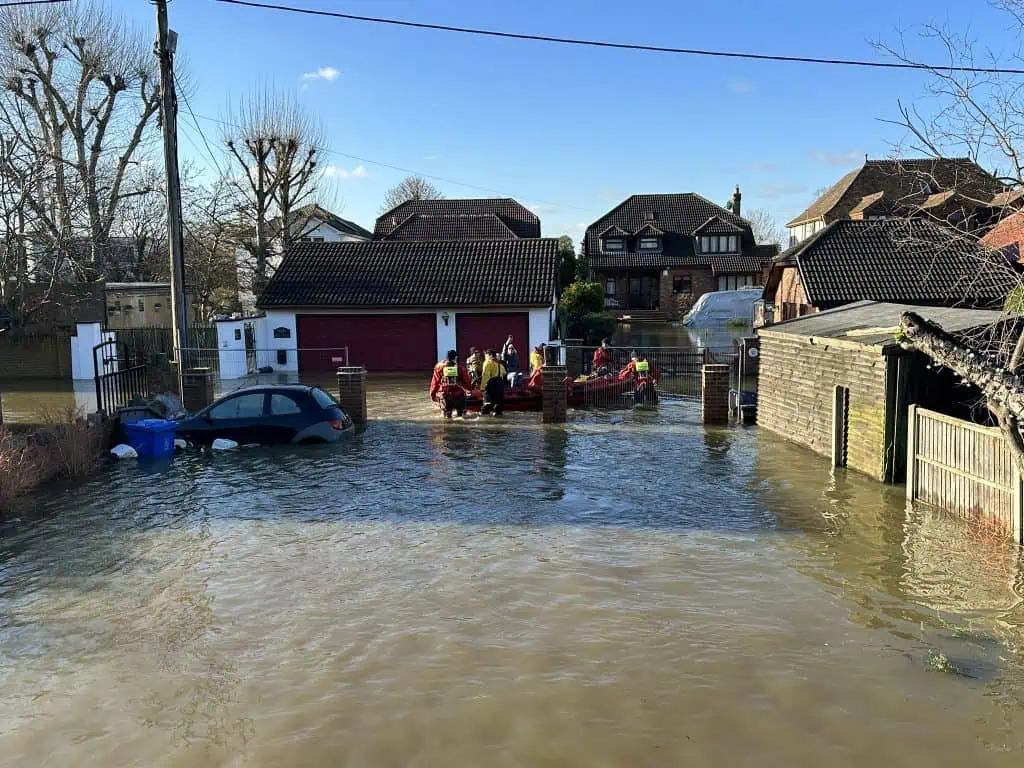
During a storm, you may encounter different types of incidents – however not all are the responsibility of the fire service.
When to call 999 and ask for the Fire and Rescue Service
- If there is flooding that causes a risk to life.
- If there us an unsafe structure on your property that is causing a threat to life.
- If there is an unsafe structure overhanging a public highway or footpath.
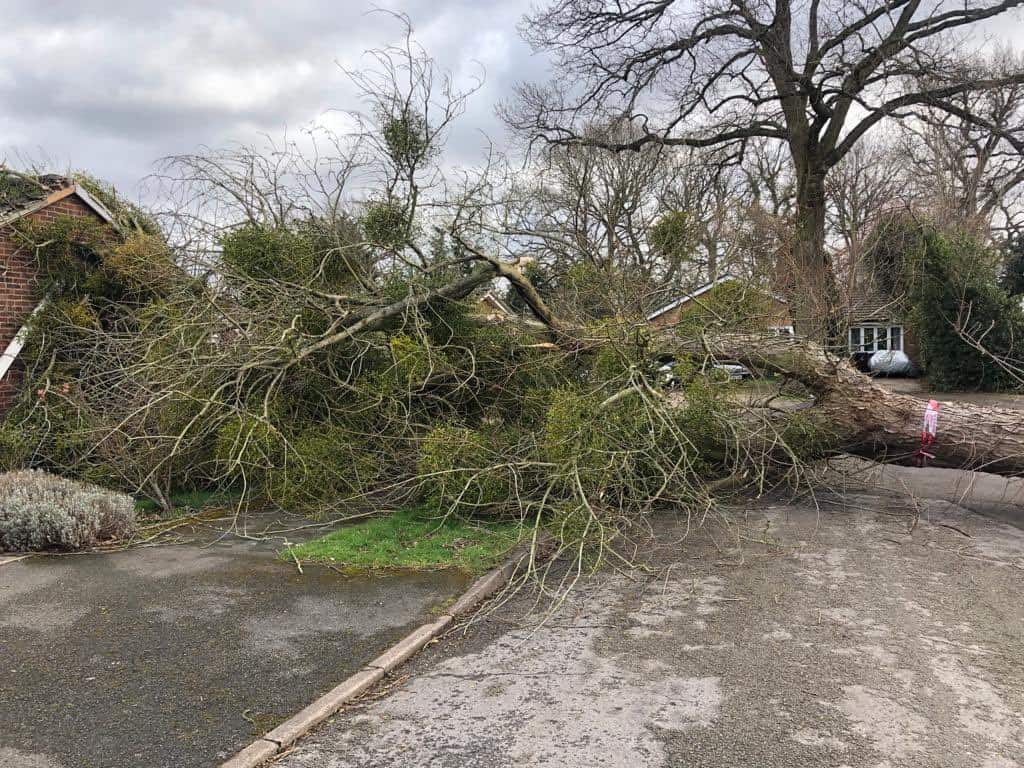
- If there is a fallen tree that causes a threat to life, either on a public highway or on private property.
- If there is flooding that has affected electrics. If in doubt, call the Fire and Rescue Service.
When not to call for the Fire and Rescue Service
- If there is a fallen tree on a road that is not endangering life. Please contact your local authority.
- If there is a fallen tree on your property that is not endangering life. That is the responsibility of the property owner.
- If there is an unsafe structure on your property that does not cause a threat to life. That is the responsibility of the property owner.
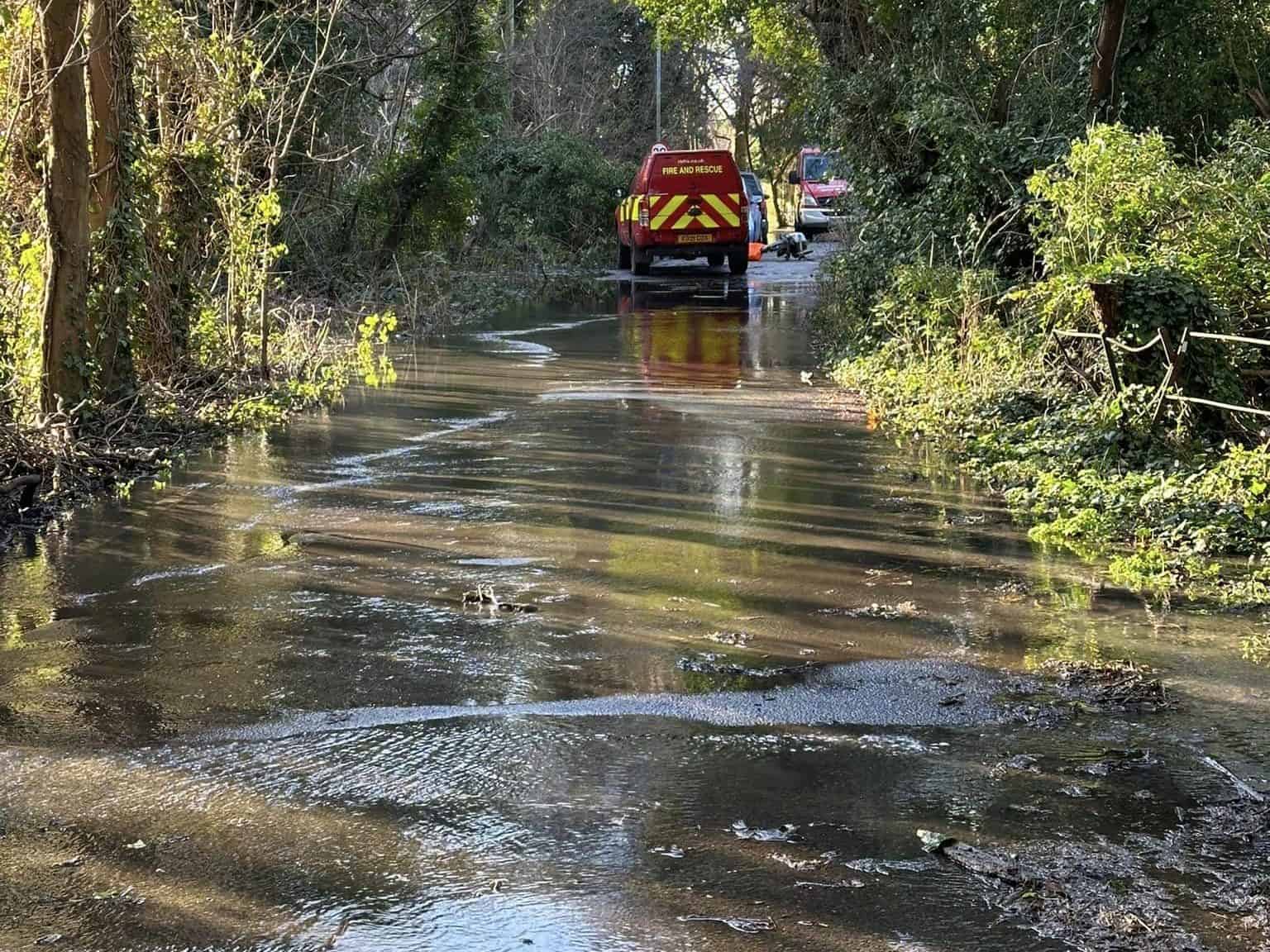
- If there is flooding that does not pose a risk to life. Please wait for the water to subside. Contact the local authority if a road is blocked.
Thunderstorms
During thunderstorms, sudden flooding could occur, especially after a period of dry conditions. Flooding could lead to difficult driving conditions, damage to homes and businesses, and possibly cause power cuts.
- Give vulnerable road users including cyclists, motorcyclists, and pedestrians more room than usual. They are more likely to be blown around by side winds, so keep your speed down and keep a safe distance.
- Give yourself more time to react while driving. Reduced visibility and wet roads will increase your stopping distance.
- Do not attempt to drive through flood water. Just 30cm of moving flood water is enough to make your car float and potentially move you into deeper water where you could become stranded.
- Do not move or ignore road closure signs. These signs are there for your safety, so please do not ignore them.
- Do not let children play in flood water. It could be deeper than it seems.
- Ensure good ventilation if using portable indoor heating appliances to dry out indoor spaces. Do not use petrol or diesel generators or other similar fuel-driven equipment indoors: the exhaust gases contain carbon monoxide which can kill.
- Do not turn on gas or electrics if they are wet. Only turn them on when they have been checked by a qualified technician.
- Ensure people and pets are upstairs if your building begins to flood.
- Stay inside during a flood and call 999 if you are in danger – for example, if it is affecting electrics.
In case of lightning
- Do not go out onto the water. If you are on water, get to the shore or bank and away from the water as quickly as you can. Water will transmit lightning strikes from further away – so the quicker you can get off the water, the better.
- Do not go paddle boarding during lightning strikes. Paddle boarding poles are made of metal or carbon fibre which are materials that conduct electricity.
- For more information about going out onto the water during lightning, please see this Lightning Safety Alert from British Rowing.
Keep up to date with the weather warnings by visiting the Met Office website.