

This summer, Royal Berkshire Fire and Rescue Service (RBFRS) is supporting Drowning Prevention Week to help keep people safe in and around the water.
The campaign, organised by the Royal Life Saving Society, begins on Saturday, 13 June, just as temperatures are expected to rise in the Royal County.
However, while the air may be getting warmer, Berkshire’s rivers, lakes and canals are still cold enough to kill.
David Crease, Area Manager Prevention and Protection for RBFRS, said: “At this time of year, when temperatures rise, there is a heightened risk of cold water shock if you jump or fall into lakes, rivers or other bodies of water.
“Cold water shock occurs when your body experiences a sudden drop in temperature after quickly entering cold water. Cold water shock is extremely dangerous. It can lead to involuntary gasp response, confusion, muscle weakness and abnormal heart rhythms, a combination of which can kill even the most experienced swimmers.”
Research by the National Water Safety Forum found that, in 2025, there were more than 200 accidental water-related fatalities across the United Kingdom. 57 percent of these occurred in inland waterways like those found in Berkshire.
Last year, 82 accidental drownings in the UK involved people who had no intention of entering the water. Knowing what to do if you fall into cold water could make all the difference.
David continued: “The simplest way to prevent cold water shock is by slowly entering the water and giving your body time to adjust. Don’t jump in suddenly – often called ‘tombstoning’ – as this can cause cold water shock even on hot summer days. Tombstoning also carries additional risks including hidden or submerged hazards, such as rocks, debris, shopping trolleys or sudden changes in depth. Jumping into water without knowing what lies beneath can result in serious injury.
“If you do find yourself in difficulty in the water, remember to float to live. Float on your back and try not to panic until the effects pass and you feel able to swim to the edge.
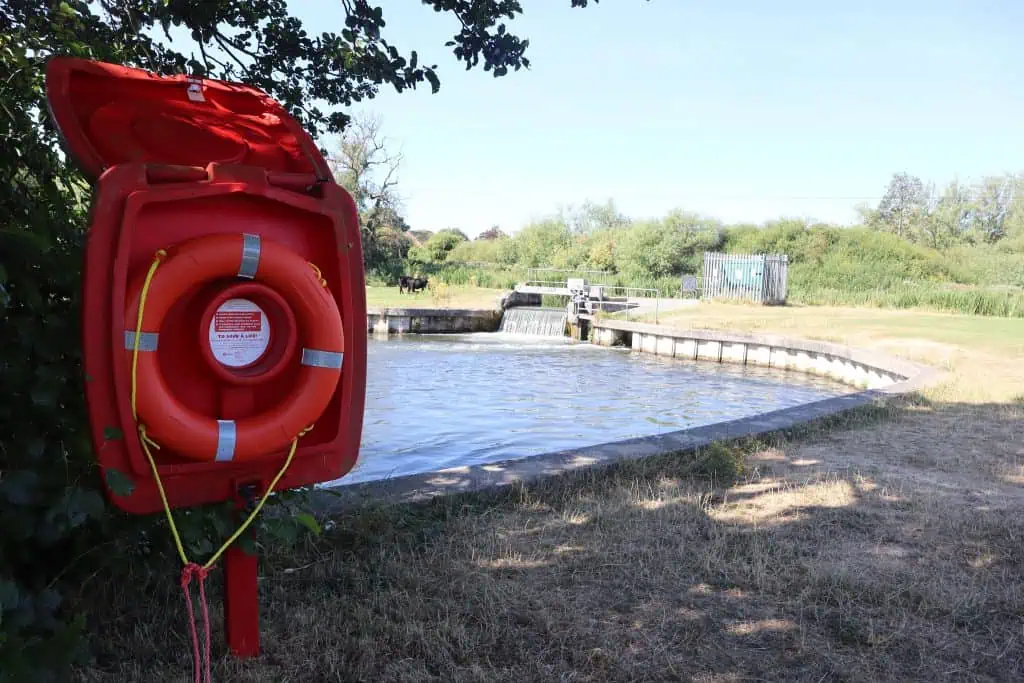
“If you see someone struggling in the water, call 999 straight away. Do not enter the water yourself and use any tools, such as throwlines and life belts, that may be nearby.
“If you are a parent, it is especially important to have conversations with your children about the dangers of open waters – to educate them and to help them prevent accidental drownings.
“Respect the water, know the risks, and stay safe this summer.”
Follow these tips to stay waterwise.
Spending Time in Water:
- If you are thinking of entering the water, consider your exit point, and any emergency exits, before you get in.
- Do not jump into open water (tombstoning).
- Avoid swimming in open water such as rivers and lakes – there could be unseen currents and reed underneath the surface that can pull you under.
- Swimming in a group, or better still at an organised event, is a safer way of starting open water swimming, never swim alone.
- Wear a brightly coloured swim hat and consider a safety buoy to make yourself more visible.
Spending Time Near Water:
- When running or walking next to the water, stay clear of the edges. Riverbanks and cliff edges may be unstable and give way – particularly after bad weather.
- Look out for trip or slip hazards – pay attention to your footing, and avoid walking or running next to water if levels are high.
- Do not enter the water if you have been drinking and avoid walking routes near water if you are under the influence of alcohol. Alcohol affects your ability to get yourself out of trouble, so find another route home instead. Look out for your friends and make sure they get home safely.
If You Find Yourself in Trouble in the Water:
- Remember – float to live. Do not panic and float on your back until the effects of cold water shock pass,
- When the cold water shock has passed, swim to the edge or call for help.
If Someone Else is in Trouble in the Water:
- Never enter the water to try and save someone, even if you are a strong swimmer.
- Call 999 immediately and ask to speak to the fire service and ambulance.
- Shout to the person in the water “swim to me!”. The water can be disorientating and this can give them focus.
- If there are lifebelts or throw lines nearby, use them. If they are attached to a rope, make sure you are holding the end of the rope or have properly secured the rope so you can pull them in.
Read more water safety information on our website, and visit our Teacher Resources page for resources and activities for children across all ages and key stages.